



Qué estás buscando?
 Página de inicio
/
Página de inicio
/
¡El avión eléctrico más grande del mundo realiza su vuelo inaugural! ¡La era de la "aviación de almacenamiento de energía" realmente ha llegado!
Aug 27, 2026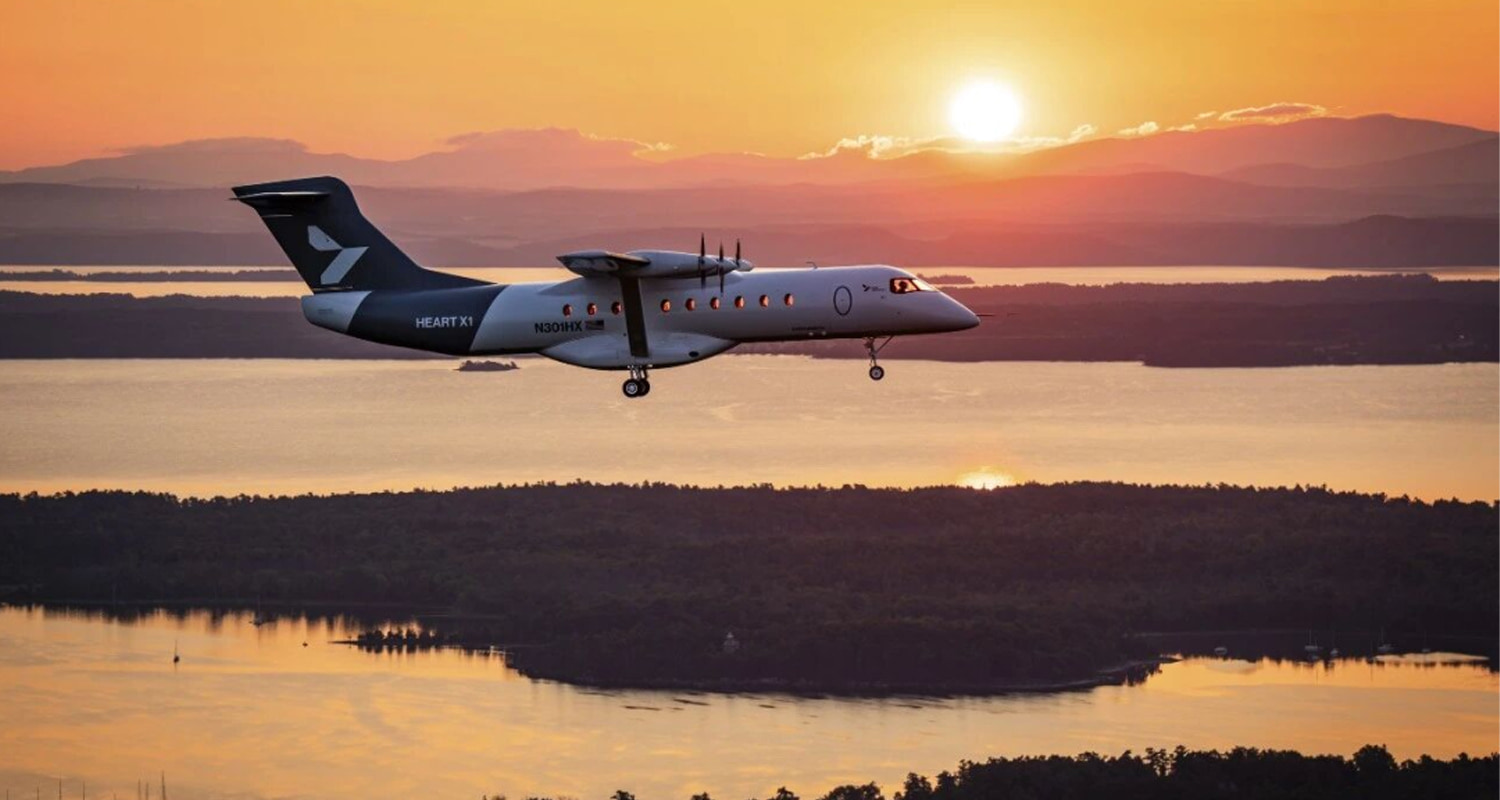
Recientemente, la historia de la aviación fue testigo de otra noticia impactante.
El 12 de agosto, en el Aeropuerto Internacional de Plattsburgh, en el estado de Nueva York, el X1, el demostrador eléctrico totalmente a batería más grande del mundo, completó su primer vuelo de prueba tripulado. El vuelo duró 27 minutos, con el sistema de propulsión totalmente eléctrico generando más de 1 megavatio y sin consumir queroseno de aviación durante todo el trayecto.
Este fue un vuelo de prueba para la verificación de la tecnología y aún no cuenta con la certificación para operar vuelos comerciales de pasajeros. El objetivo de este vuelo es recopilar un conjunto completo de datos de vuelo para el futuro avión regional híbrido de 30 plazas, el ES-30.
Según el comunicado oficial de Heart Aerospace y los informes relacionados, el avión demostrador X1 probado en esta ocasión tiene una longitud de fuselaje de 23,2 metros, una envergadura de 32,3 metros, un peso máximo al despegue superior a 11.340 kg y está equipado con cuatro motores eléctricos de 400 kW, con una potencia instalada total de 1.600 kW. Durante el vuelo de prueba, la potencia de salida continua real superó 1 megavatio, la altitud máxima de vuelo fue de 335 metros y la velocidad aerodinámica máxima de diseño fue de 259 km/h. El vuelo inaugural incluyó el proceso completo de rodaje en tierra, despegue, ascenso, maniobras en vuelo, aproximación y aterrizaje, todo realizado por un único piloto de pruebas.
En cuanto a la cuestión más acuciante del coste, Heart Aerospace declaró en su comunicado de prensa sobre el primer vuelo que el consumo eléctrico del demostrador X1 durante 27 minutos de vuelo fue de aproximadamente 5 dólares. Si bien esta cifra no incluye otros costes como los de los pilotos, el mantenimiento, los gastos aeroportuarios, la financiación y los seguros, representa una reducción significativa en comparación con el coste del combustible de aviación.
¿Los aviones eléctricos ya están aquí?
La economía de baja altitud ha experimentado un auge en los últimos dos años. En comparación con los grandes aviones comerciales, las futuras aeronaves eléctricas no pueden depender de los grandes aviones de pasajeros propulsados por combustible. Es previsible que las principales aplicaciones de las aeronaves eléctricas se centren en el transporte de pasajeros y carga en vuelos de corta distancia.
El exitoso primer vuelo del prototipo X1 de Heart Aerospace ha aclarado la futura aplicación comercial de las aeronaves eléctricas. Mi país también ha estado explorando e innovando continuamente en el campo de la economía de baja altitud durante los últimos dos años.
Recientemente, XPeng Motors anunció que, hasta la fecha, su coche volador ha recibido más de 7.000 pedidos y que este año comenzará la producción en masa de su primer coche volador.
Actualmente, XPeng ha desarrollado dos importantes sistemas de vehículos voladores. El A868 está diseñado con una configuración de rotor basculante completo. Basado en la arquitectura Kunpeng de XPeng Motors, de gran autonomía, utiliza un núcleo de potencia híbrido-eléctrico de grado aeroespacial de desarrollo propio para proporcionar un suministro de energía continuo y suficiente. Se espera que alcance una autonomía de 500 km y una velocidad máxima de 360 km/h.
El A868 combina la comodidad del despegue y aterrizaje vertical con la rentabilidad de los vuelos de largo alcance, eliminando la dependencia de las pistas de los aeropuertos tradicionales. El prototipo del A868 completó con éxito su primer vuelo de prueba en noviembre de 2025, entrando oficialmente en la crucial etapa de validación de vuelo.
¿Qué tiene de diferente la "batería voladora"?
Además de los costes de vuelo, la industria también está prestando mucha atención a la batería y la autonomía del X1, ya que esto está directamente relacionado con la distancia de los vuelos comerciales futuros.
Según las especificaciones técnicas, el prototipo X1 está equipado con una batería de 1650 kWh, con un peso aproximado de 5 toneladas, desarrollada conjuntamente por Heart Aerospace y BAE Systems. En modo totalmente eléctrico, tiene una autonomía de aproximadamente 200 kilómetros y una velocidad de crucero de aproximadamente 204 km/h (110 nudos).
Este alcance, con la densidad energética actual de las baterías, es claramente insuficiente para cumplir con los requisitos de vuelo de larga distancia de las rutas comerciales. La transición de los vuelos experimentales a la comercialización se ve limitada por la densidad energética actual de las baterías.
Normalmente, la densidad de energía desistemas de bateríasEn los vehículos eléctricos de consumo, la densidad energética se sitúa principalmente entre 160 y 220 Wh/kg. En aplicaciones aeronáuticas, el consenso del sector es que se necesita una densidad energética estable de 330 Wh/kg para que un avión regional híbrido de 30 plazas alcance una autonomía comercialmente viable.
Economía a baja altitud, nuevos escenarios de almacenamiento de energía
El vuelo inaugural del avión eléctrico más grande del mundo no solo demuestra que la aviación eléctrica ha superado el punto crítico de la propulsión eléctrica a nivel de megavatios, sino que también abre nuevas perspectivas para la industria del almacenamiento de energía. El almacenamiento de energía para la aviación podría ser el próximo escenario de aplicación comercial de alto crecimiento.
En primer lugar, para que los aviones eléctricos alcancen la comercialización, además de superar los desafíos de la tecnología de las baterías, cómo "recargarlas" mejor y más rápido es también una cuestión práctica que debe tenerse en cuenta.
La recarga de aeronaves difiere de la de vehículos eléctricos. La capacidad de la red eléctrica de los aeropuertos es limitada, y el ciclo de construcción y la cobertura de las estaciones de recarga fijas son prolongados e insuficientes. Este es uno de los principales obstáculos que limitan su comercialización.
De hecho, China ya ha explorado y puesto en práctica esta tecnología. La estación de carga móvil para eVTOL desarrollada por Wofei Changkong, equipada con una batería de almacenamiento de energía de 264 kWh y compatible con una plataforma de carga de CC de alto voltaje de 800-1000 V, puede recargar completamente un eVTOL en tan solo 20 minutos. Con la batería completamente cargada, puede realizar más de tres operaciones de carga y admite la programación continua de múltiples aeronaves.
En noviembre pasado, Fengfei Aviation, en conjunto con CATL, lanzó el primer aeropuerto acuático eVTOL de cero emisiones de carbono del mundo. Integra plataformas de despegue y aterrizaje,almacenamiento de energía fotovoltaicay capacidades de carga, sistemas de programación inteligentes y soporte de comunicación, y se puede desplegar rápidamente en varias áreas acuáticas como ríos, lagos y mares. La cubierta está totalmente cubierta con paneles fotovoltaicos, combinados conbaterías de almacenamiento de energíapara lograr un circuito cerradosistema de carga y almacenamiento de energía fotovoltaica.
Además, las aplicaciones de almacenamiento de energía ya se han extendido al sector de los drones. El aeropuerto de intercambio de baterías para drones de tamaño mediano Pengyun X9 de Sichuan Pengbo Intelligent Manufacturing permite que los drones intercambien sus baterías de forma autónoma tras el aterrizaje, con un tiempo mínimo de tan solo 180 segundos. Este aeropuerto puede gestionar entre 24 y 32 vuelos de drones al día. Este caso práctico demuestra otra aplicación del almacenamiento de energía en operaciones de drones de alta frecuencia: el intercambio de baterías en lugar de la carga. La batería de almacenamiento actúa como un depósito de energía compartido, proporcionando servicios para múltiples vuelos de drones.
Entonces, ¿cuál es el potencial de mercado para la industria del almacenamiento de energía en el futuro? Varios conjuntos de datos pueden darnos una idea.
En 2025, el mercado mundial de baterías de litio para eVTOL alcanzó aproximadamente los 102 millones de dólares estadounidenses, y se prevé que llegue a los 813 millones de dólares estadounidenses en 2032, con una tasa de crecimiento anual compuesta del 35,1 %. Según las estadísticas del sector, en 2025, los envíos de baterías de litio para el mercado nacional de aviación a baja altitud se encontraban en una fase inicial, por debajo de los GWh, pero se espera que la demanda del mercado supere los 10 GWh en 2030 y los 50 GWh en 2035.
Estos numerosos casos revelan una lógica común: el papel del almacenamiento de energía en el campo de la aviación eléctrica va mucho más allá de simplemente "instalar baterías en las aeronaves". Desde estaciones de carga móviles en tierra hasta plataformas de carga y almacenamiento de energía fotovoltaica en el agua, desde aeropuertos de intercambio de baterías para drones hasta baterías de grado aeronáutico para coches voladores, el almacenamiento de energía está penetrando en todos los aspectos de la economía de baja altitud de diversas formas.



5th floor, Block A, Science Avenue,High-tech District, Hefei , Anhui .China