



Qué estás buscando?
 Página de inicio
/
Página de inicio
/
Con eventos meteorológicos extremos frecuentes, ¿cómo pueden protegerse las centrales fotovoltaicas?
Jul 15, 2026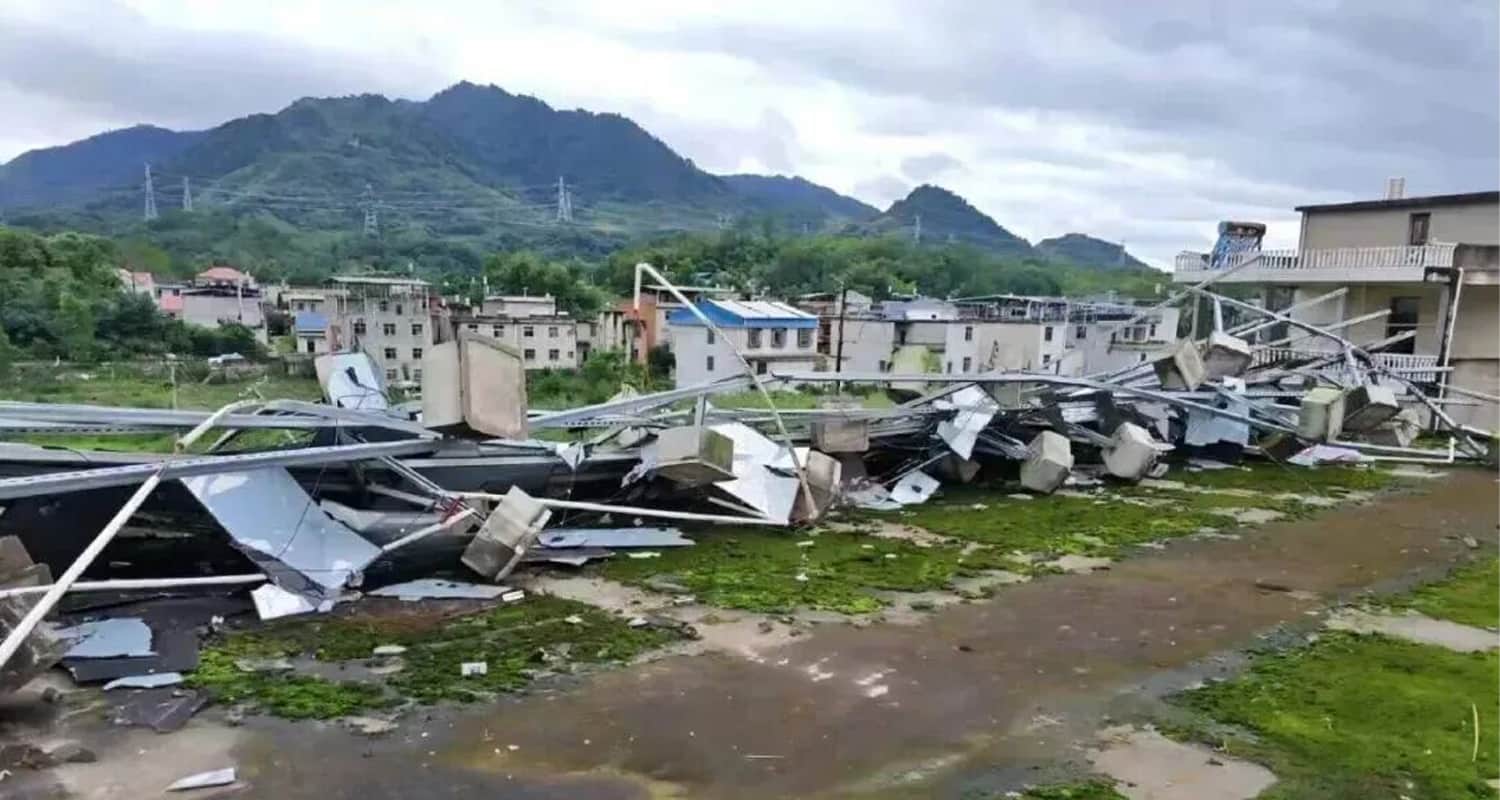
Desde julio, los fenómenos meteorológicos extremos se han vuelto cada vez más frecuentes en toda China, incluyendo inundaciones en Guangxi, tifones en la región del delta del río Yangtsé, inundaciones repentinas en el norte de Hebei, clima convectivo severo en Hubei y lluvias torrenciales en Liaoning. Desde el noreste hasta el sur de China, múltiples provincias están experimentando el impacto de fenómenos meteorológicos extremos.
Para las plantas de energía fotovoltaica, la llegada de fenómenos meteorológicos extremos también es una prueba de sus mecanismos operativos. Sin medidas preventivas adecuadas, podrían producirse pérdidas incalculables.
Grandes áreas de módulos fotovoltaicos quedaron sumergidas por las inundaciones.
Afectada por el tifón Maysak, el décimo tifón del año, Guangxi experimentó lluvias intensas continuas. El 6 de julio, varios embalses de la ciudad de Hengzhou, Guangxi, experimentaron situaciones peligrosas.
Anteriormente, el Comité Municipal de Gestión de Emergencias de Nanning emitió un aviso indicando que desde el 4 de julio, la mayor parte de la ciudad de Nanning había experimentado lluvias de intensas a torrenciales, con algunas zonas sufriendo lluvias extremadamente intensas. Los niveles de agua de algunos ríos aumentaron rápidamente y algunos embalses experimentaron emergencias graves, haciendo que la situación del control de inundaciones fuera severa. Según el "Plan de Emergencia de Ayuda contra Inundaciones y Sequías de la Ciudad de Nanning", la respuesta de emergencia para el control de inundaciones en la ciudad de Nanning se elevó del Nivel III al Nivel I a las 11:30 a. m. del 6 de julio.
Pasajeros de trenes de alta velocidad filmaron grandes áreas de centrales fotovoltaicas montadas en suelo en Guangxi siendo sumergidas por las aguas de inundación. Además, en algunas zonas gravemente inundadas, las aguas ya habían anegado partes de estas centrales fotovoltaicas, y las centrales fotovoltaicas a gran escala mostraban daños visibles en distintos grados.
Más importante que los daños a estos módulos fotovoltaicos es el problema de seguridad eléctrica. Dado que las centrales fotovoltaicas son generadores de energía, cuando estos dispositivos de generación quedan sumergidos, si cables eléctricos activos rotos caen al agua de la inundación, toda el área inundada tendrá un voltaje peligroso.
Es imposible determinar a simple vista si la superficie del agua está electrificada. Si el personal de rescate entra accidentalmente, corre un alto riesgo de sufrir electrocución por tensión de paso, una situación de riesgo extremadamente elevado.
Mientras tanto, los vídeos publicados en línea muestran que algunas centrales fotovoltaicas en tejados, debido a una estabilidad insuficiente, fueron completamente arrastradas por las aguas de inundación. Algunos marcos de componentes se deformaron, los cables se balanceaban violentamente y grandes cantidades de agua de lluvia entraban.
¡Los fuertes vientos volcaron centrales fotovoltaicas en Hubei y Zhejiang!
Durante los últimos dos días, el tifón Bavi tocó tierra en las regiones de Jiangsu, Zhejiang y Shanghái. El 11 de julio, Bavi tocó tierra en la costa de la calle Kanmen, condado de Yuhuan, Taizhou, provincia de Zhejiang, y luego realizó un segundo aterrizaje alrededor de la medianoche del 12 de julio en la ciudad de Qingjiang, condado de Yueqing, Wenzhou, convirtiéndose en el tifón más fuerte que ha golpeado mi país este año. Los pueblos de Yingdong y Dongsha, ubicados cerca de la costa, estaban situados cerca de los puntos de aterrizaje del tifón.
Según los informes, una empresa de Taizhou, provincia de Zhejiang, sufrió pérdidas importantes ya que todos sus paneles solares de tejado fueron arrancados por el tifón Bavi.
Cabe destacar que, en contraste, un propietario de una vivienda en Wenzhou, provincia de Zhejiang, optó por una protección preventiva contra el tifón.
Se entiende que, para prepararse para el tifón Bavi, un propietario de una vivienda en Wenzhou eligió desmontar y conservar todos los paneles solares de su tejado antes de que llegara el tifón. El año pasado, este propietario invirtió en la construcción de un proyecto de paneles solares que cubría aproximadamente 1.000 metros cuadrados en el tejado de un edificio de gran altura cerca del mar en el distrito de Longwan, Wenzhou.
El propietario afirmó que desmontar y volver a instalar los paneles supondría costes adicionales de varios miles de yuanes, pero la principal preocupación era el riesgo de que los paneles solares fueran arrastrados por el tifón y lesionaran a otras personas.
Mientras tanto, el 6 de julio, la ciudad de Baisha, condado de Yangxin, ciudad de Huangshi, provincia de Hubei, fue golpeada por un clima convectivo severo, con vientos repentinos y fuertes que causaron diversos grados de daños a las instalaciones exteriores de toda la zona. La central fotovoltaica a nivel de aldea de 25 kilovatios en la aldea de Wangwujing sufrió graves daños.
Se entiende que esta central eléctrica es un proyecto central de generación de ingresos para el colectivo de la aldea. Las fotos del lugar muestran grandes áreas de módulos fotovoltaicos volcados y dañados, soportes fotovoltaicos gravemente deformados y dispersos en el suelo, muchos paneles fotovoltaicos rotos y deformados, y líneas de transmisión rotas y desprendidas. Esto no solo causó pérdidas importantes, sino que también creó múltiples riesgos de seguridad en el lugar del desastre, incluido el posible riesgo de fugas eléctricas y caída de escombros.
Con los frecuentes fenómenos meteorológicos extremos, ¿cómo pueden protegerse las plantas de energía fotovoltaica (FV)?
Ante estas circunstancias imprevistas, ¿cómo pueden las plantas de energía FV evitar pérdidas o minimizarlas? Para los propietarios, la protección de las plantas de energía FV no puede depender de esfuerzos de última hora; en su lugar, debe establecerse un sistema integral de protección durante todo el ciclo de vida que abarque la selección del emplazamiento, el diseño, la operación y mantenimiento, la respuesta ante emergencias y los seguros.
En primer lugar, en términos de selección del emplazamiento, evitar riesgos es crucial desde el principio. Durante la etapa de planificación, deben realizarse evaluaciones de riesgo basadas en datos meteorológicos históricos y la probabilidad de fenómenos meteorológicos extremos. Evitar llanuras de inundación y zonas de alto riesgo de desastres geológicos es un requisito fundamental. La norma obligatoria del Ministerio de Vivienda y Desarrollo Urbano-Rural, "Especificaciones para Proyectos de Ingeniería de Generación de Energía Solar (Borrador para Comentarios)", exige claramente que el estándar de control de inundaciones para las áreas de conjuntos FV no sea inferior al nivel máximo de agua (marea) de 30 años. Esto significa que las condiciones hidrológicas deben considerarse plenamente durante la selección del emplazamiento y que la complacencia es inaceptable.
En términos de diseño, los módulos FV deben emplear pilotes de doble fila y refuerzos diagonales para mejorar la resistencia al arranque de la cimentación de soporte, y la conexión entre el marco del módulo y el bloque de sujeción debe reforzarse para evitar fallos por tracción. El nivel de seguridad de los sistemas de montaje fotovoltaico (FV) no debe ser inferior al Nivel III, y el nivel de seguridad de la cimentación de montaje no debe ser inferior al nivel de seguridad de la estructura superior. Los sistemas de seguimiento deben tener la capacidad de colocarse en una posición segura.
Además, el nivel de protección de los equipos eléctricos exteriores no debe ser inferior a IP54. Los inversores, cajas combinadoras, subestaciones transformadoras y compartimentos de almacenamiento de energía deben reforzarse con un sellado e impermeabilización mejorados, bases elevadas y dispositivos adicionales de bloqueo y drenaje de agua. Los emplazamientos bajos deben estar equipados previamente con equipos de bombeo, y los puntos de entrada de agua deben sellarse para evitar daños por agua, cortocircuitos y riesgos de explosión.
Además de los preparativos preliminares, la falta de mantenimiento rutinario puede provocar fallos en momentos críticos.
Es importante saber que las 24-48 horas antes de un tifón son una ventana crítica que determina el destino de una central eléctrica. Antes de la llegada de fenómenos meteorológicos extremos, es necesario inspeccionar los bloques de presión centrales, los bloques de presión laterales y los pernos de fijación, y apretar, reemplazar o reparar cualquier sujetador suelto, oxidado o ausente. Compruebe las vigas transversales y verticales del sistema de montaje para detectar flexiones, deformaciones y grietas. Las centrales eléctricas antiguas, los tejados expuestos al viento y los conjuntos de gran extensión deben reforzarse con barras de soporte resistentes al viento y sacos de arena como contrapeso. Con el marco de los paneles solares constantemente expuesto, unas inspecciones diarias inadecuadas pueden provocar problemas como sujetadores sueltos y soportes oxidados o agrietados, que pueden verse agravados por los fuertes vientos.
Reemplace inmediatamente cualquier sello envejecido o desgastado de las puertas de los gabinetes del inversor y de la caja combinadora. Selle los orificios de entrada de cables y los espacios en las bandejas de cables para evitar el reflujo de agua de lluvia. Inspeccione las uniones de los cables de CA y CC para evitar fugas y chispas durante la lluvia.
En caso de condiciones meteorológicas extremas severas, se puede optar por desmontar completamente y conservar los paneles solares, como mencionó el propietario de Zhejiang, y volver a instalarlos una vez que el clima vuelva a la normalidad. Aunque esto implica costos adicionales de instalación y desmontaje, es mucho menor que la pérdida de toda la central eléctrica por vuelco y destrucción.
Por supuesto, incluso con la protección más completa, el poder destructivo del clima extremo a veces puede superar las expectativas. En tales casos, el seguro es el último recurso para mitigar las pérdidas.
El seguro contra desastres naturales para centrales de energía solar fotovoltaica cubre los daños al equipo causados por terremotos, inundaciones, tifones, granizo, tormentas de arena, etc., con una compensación basada en las pérdidas reales. La destrucción total puede ser compensada según el costo de reemplazo. Sin embargo, cabe señalar que los defectos del propio equipo, el uso excesivo y el envejecimiento no están cubiertos.
Actualmente, la industria de seguros también está innovando constantemente. Algunas instituciones han lanzado productos financieros como el "seguro meteorológico de activos de carbono". Los departamentos reguladores financieros de algunas regiones están guiando a las instituciones de seguros para desarrollar productos de seguro integrales que cubran daños a la propiedad, pérdida de ingresos por generación de energía y responsabilidad civil.
¿Siguen siendo adecuadas las plantas de energía fotovoltaica para zonas propensas a condiciones meteorológicas extremas?
Con la creciente frecuencia de los fenómenos meteorológicos extremos, surge una pregunta real: ¿siguen siendo adecuadas las plantas de energía fotovoltaica para estas zonas de alto riesgo?
La respuesta es sí, pero los requisitos deben elevarse. En primer lugar, es crucial entender que el clima extremo no es una "enfermedad terminal" para las plantas de energía fotovoltaica. Los informes relacionados indican que la mayoría de las plantas de energía fotovoltaica, con una selección adecuada del emplazamiento, diseño y mantenimiento, pueden resistir la mayoría de los fenómenos meteorológicos extremos.
En el futuro, la construcción de sistemas fotovoltaicos en estas zonas requerirá cumplir altos estándares en múltiples dimensiones, incluida la selección del emplazamiento, el diseño, la operación y el mantenimiento, y los seguros. Desde la perspectiva de las tendencias de la industria, el sistema de prevención de desastres para plantas de energía fotovoltaica está pasando del tradicional "reparación posterior al desastre" a un modelo integral de "refuerzo estructural previo al desastre, mejoras del equipo, gestión y control inteligentes, y distribución diferenciada".
Después de todo, el futuro de la industria fotovoltaica no depende únicamente de mejorar la eficiencia de generación de energía y reducir los costos, sino también de si puede garantizar su seguridad frente a desafíos climáticos cada vez más graves.



5th floor, Block A, Science Avenue,High-tech District, Hefei , Anhui .China